Creatine and creatinine are different, and a hormone measurement is not a hair-loss outcome. Separate the questions before interpreting safety evidence.
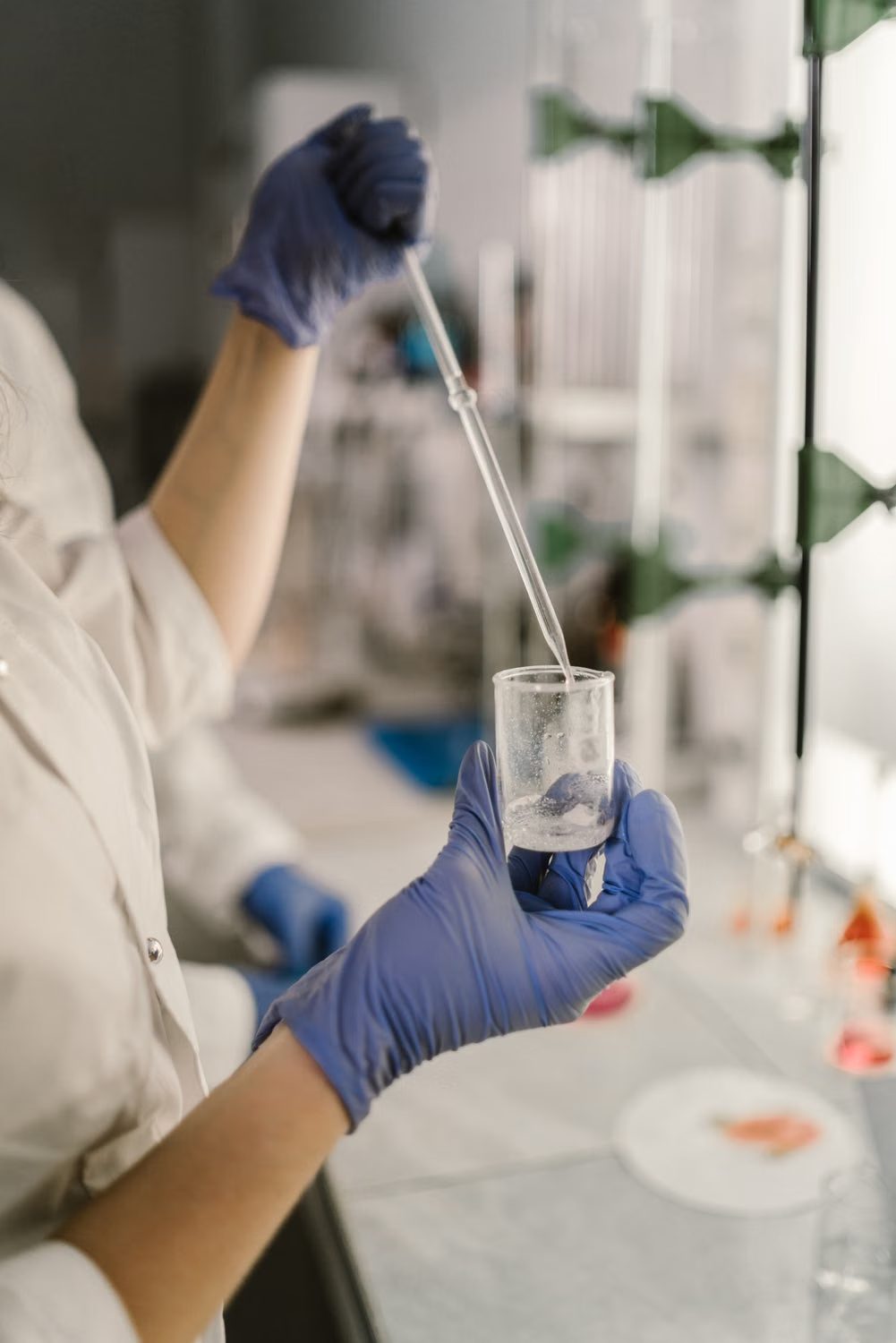
Laboratory worker transferring liquid with a pipette. Illustrative photograph; not a Creapure® product, an ACC facility or a documented supplement outcome. Photo: Mikhail Nilov / Pexels License.
Creatine is the supplement ingredient; creatinine is a metabolic product used in kidney assessment. Supplement use can affect interpretation, so one value is not enough to diagnose or dismiss kidney injury.
A 2026 meta-analysis found higher serum creatinine without significant between-group differences in urea or estimated filtration rate, while calling for longer trials. Tell the healthcare team about supplement use and do not independently disregard an abnormal test.
Research in healthy exercising adults does not establish safety for every disease, medication, amount or duration. Kidney disease and other medical circumstances require individual assessment.
A brand FAQ should disclose the complete formula and serving. People with kidney problems or receiving treatment should discuss use with their clinician. Individual gastrointestinal symptoms should not be dismissed by citing general safety research.
A 2025 twelve-week randomised trial in healthy resistance-trained men found no significant between-group differences in DHT or hair-related outcomes. This addresses the concern more directly than inferring hair loss from a hormone mechanism alone.
The study still has population and duration limits. It cannot guarantee that no individual will ever experience hair loss. Persistent changes deserve assessment; events occurring in sequence do not by themselves establish causation.
Changes in body water or scale weight should not automatically be labelled fat gain or oedema. Equally, unexplained swelling or symptoms should not simply be called an expected supplement response.
Provide balanced information and encourage appropriate assessment of symptoms. Creapure® sourcing and quality information do not replace individual suitability or a safety review of the finished product.
Discuss creatine formulation, documentation and customer-information needs with ACC Biotech so OEM product details and market content remain consistent.
Contact ACC Biotech · WhatsApp +852 5544 1314
Sources checked 14 November 2026. Ingredient specifications and finished-product requirements should be confirmed for the project.
Cover: Black and white close-up of tablet blister packs. Illustrative photograph; not a Creapure® product, an ACC facility or a documented supplement outcome. Photo: freestocks.org / Pexels License. Photo source · Pexels License
Inline: Laboratory worker transferring liquid with a pipette. Illustrative photograph; not a Creapure® product, an ACC facility or a documented supplement outcome. Photo: Mikhail Nilov / Pexels License. Photo source · Pexels License