AKK, short for Akkermansia muciniphila, is an important area of gut microbiome research. For supplement brands, a credible AKK product connects strain research, ingredient specifications and finished-product design. ACC Biotech offers discussions on sourcing and supplement OEM development with two proprietary AKK ingredients: AKK PROBIO® and AM06™. This guide explains how to evaluate them for a practical product brief.
A. muciniphila is associated with the intestinal mucus layer. Research explores its relationships with the gut barrier, other microbes and metabolic indicators. Associations between its abundance and health do not prove that any AKK supplement will deliver the same outcome. An early human proof-of-concept study provided a research foundation; species-level context must be distinguished from evidence for a specific commercial ingredient.
Read a proposed mechanism in three stages: interactions between microbial cells or components and intestinal cells; observations in laboratory and animal models; and human evidence for the exact strain and preparation. A pathway diagram explains a research hypothesis. It cannot replace a human trial or validate a finished formula.
One example is the outer-membrane protein Amuc_1100. A 2017 Nature Medicine animal study examined its interaction with TLR2 and gut-barrier effects, alongside pasteurized bacteria. This helps explain interest in non-living AKK preparations. It does not directly validate either commercial ingredient in this guide or a finished supplement.
ISAPP consensus terminology requires probiotics to be live microorganisms with a demonstrated health benefit when used in adequate amounts. Postbiotics are preparations of non-living microorganisms and/or their components with a health benefit. Inactivation alone does not establish that a preparation is an effective postbiotic.
The AKK PROBIO® strain page identifies CGMCC No.20955 and offers live and pasteurized forms. Selection can therefore start with the intended format, storage needs and product positioning. Confirm the strain identifier and form in the specification and COA rather than ordering an unspecified “AKK powder.”
A 2025 randomized controlled trial enrolled 130 overweight participants for eight weeks, comparing live PROBIO, its postbiotic preparation and placebo. It reported body-weight and metabolic outcomes. Review the full paper’s dose, analysis population, between-group results and limitations before using those findings for product positioning. They cannot automatically validate another formula or guarantee weight loss for every consumer.
Ask ACC Biotech about research summaries, strain identity, specifications and batch documentation for the selected form, so the evidence review follows the actual ingredient used in the product.

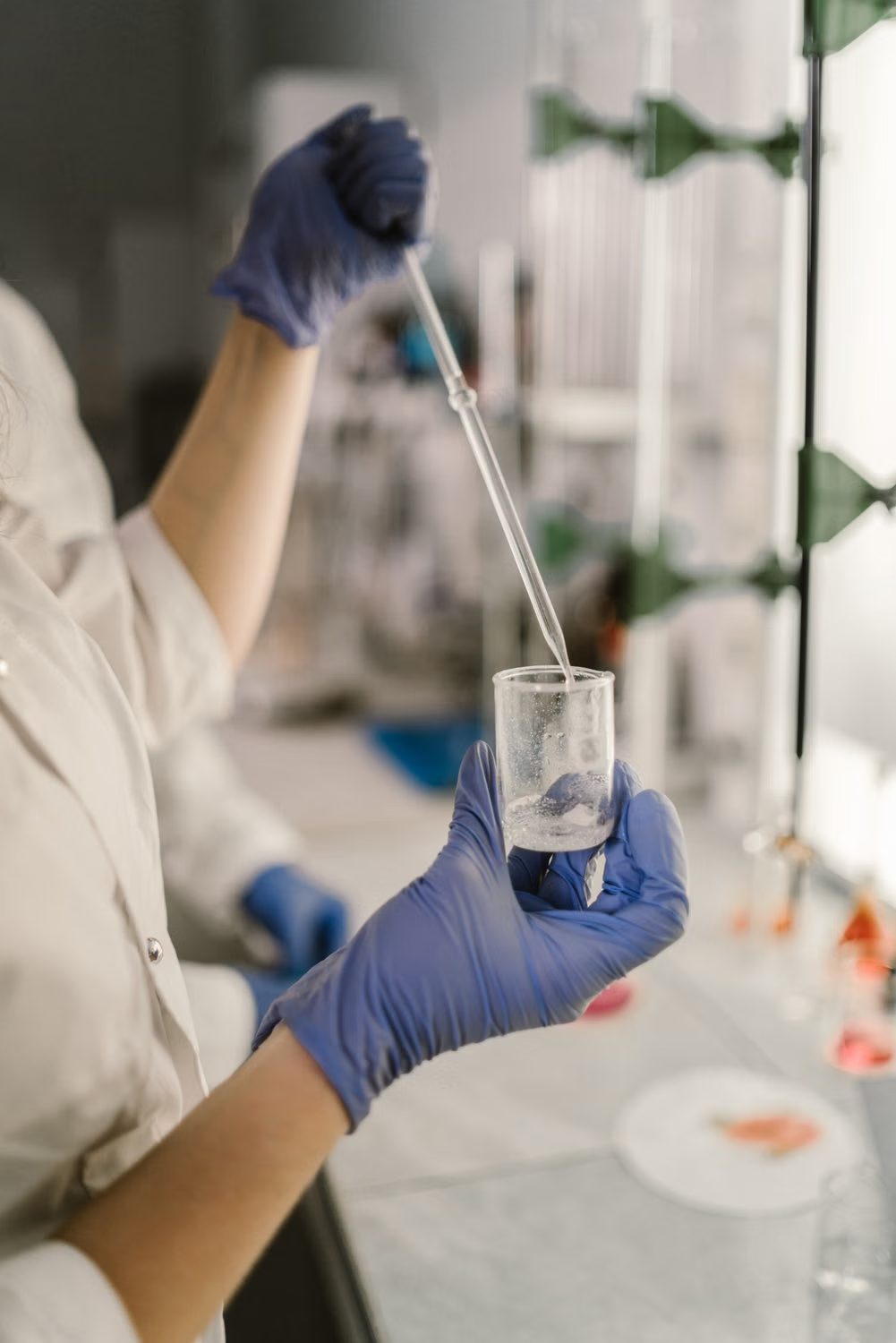
Real stock photo illustrating laboratory documentation; not an AKK micrograph, a study of either ingredient, or an ACC Biotech facility. Photo: Polina Tankilevitch / Pexels.
The AM06™ supplier website describes a strain isolated from healthy human breast milk and its PROFORCARE® heat-inactivation technology. Confirm ambient-storage conditions and ingredient shelf life against the selected specification, packaging and current documentation. An ingredient shelf life does not establish the shelf life of a blended product, and its source alone does not establish suitability for infants, pregnant women or every consumer.
A 2023 Microbiology Spectrum paper examined strain characteristics, genomes, tolerance and safety in mice, supporting further evaluation of AM06 as a candidate strain. This laboratory and animal work provides strain background; it is not human efficacy evidence for a finished supplement.
The supplier lists trial NCT05720299. As checked on 6 October 2026, the public registry marks it completed with no results posted. It describes AKK, berberine and placebo arms over 12 weeks. Request the full report to confirm the strain, inactivation status, dose and outcomes before applying it to the selected AM06™ powder. This article makes no diabetes-treatment or guaranteed-weight-loss claim from that registration.
Patents may cover a strain, process or use. Review their relevant scope, current status and trademark conditions for the intended market. A proprietary ingredient still needs specifications and research documentation to support a credible product proposition.
For US sourcing context, the PROBIO supplier reports self-affirmed GRAS documentation for both forms and NDI #1468 for its pasteurized form only; AM06 also refers to Self-GRAS. FDA explains that qualified experts outside government can make GRAS determinations. Self-affirmed GRAS should not be described as FDA efficacy certification, and an NDI notification is distinct from drug approval. Review original documents, use conditions and destination-market requirements; one market’s documentation is not worldwide launch permission.
Evaluate the specific preparation’s evidence and market conditions. Check that research matches the strain and inactivated form, then verify finished-product quality. Ambient storage does not remove the need for validation.
No. “Slimming bacteria” is a market nickname, not a standardized efficacy conclusion. Use the full organism name, strain and form, and avoid converting research findings into guaranteed weight loss or disease-treatment claims.
Yes. Share your target market, audience, intended format and packaging requirements. ACC Biotech can discuss ingredient selection, formula feasibility, specifications and manufacturing arrangements. Confirmed options and documentation depend on the project.
ACC Biotech offers project consultations on AKK PROBIO®, AM06™ and supplement OEM. Contact us to explore a gut-health, adult daily-nutrition or metabolic-health research concept. Finished-product positioning and claims must be supported by relevant evidence and destination-market requirements.
Contact ACC Biotech about AKK ingredients and supplement OEM or enquire via WhatsApp. Explore our one-stop supplement OEM/ODM service and ingredient COA checklist.
Sources checked: 6 October 2026. This article supports ingredient and product-development evaluation and is not medical advice. Trademarks belong to their respective owners.